

Representative Sub-Sampling in Mineral Workflows: Riffle Splitters Address Real-World Pain-Points
News originally published by
EIN Presswire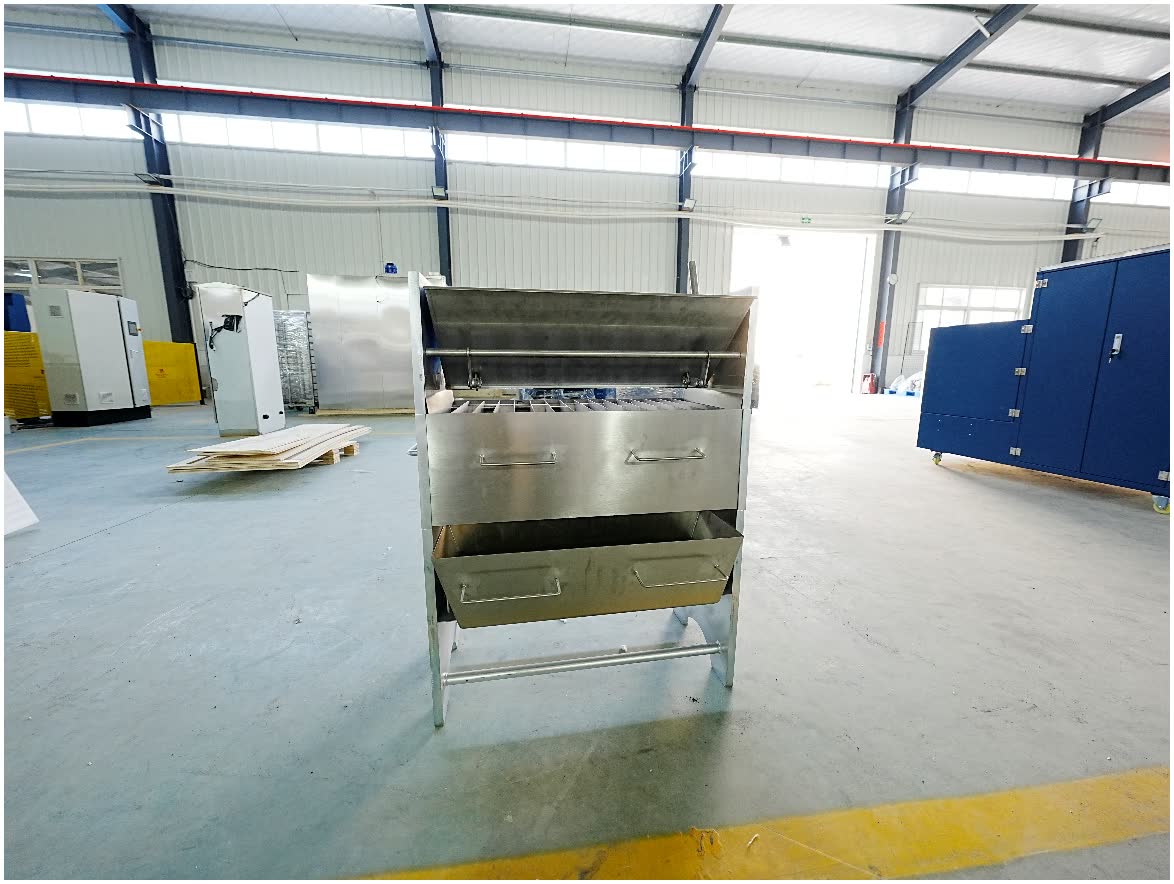
Many laboratories still rely on historic manual coning-and-quartering workflows inherited from early mineral-assay practice. While acceptable for low-volume preliminary field screening, manual quartering carries well-documented practical weaknesses for modern high-throughput, ISO/IEC 17025-compliant mineral-testing environments. This article starts from real-world operational pain-points in both field-return sample receiving and laboratory-scale preparation, explains why gravity-fed riffle splitters have become mainstream for representative division, defines their inherent application boundaries, and outlines practical field-proven assessment criteria for mineral-lab hardware selection.
Real-World Operational Pain-Points Created by Manual Coning-and-Quartering
Coning-and-quartering works by piling material into a conical heap, flattening the pile, and splitting it into four quadrants, retaining two opposite quarters for further processing. Physical segregation occurs during heap formation: coarse particles roll toward the outer base of the cone, while fine-grained mineral fractions concentrate near the apex. Even with strictly standardised operator technique, intrinsic particle-size stratification persists. Three tangible consequences appear in day-to-day mineral-lab operations.
Batch-to-batch variability driven by human performance Sub-sampling quality depends entirely on shovel handling, heap-forming skill and operator alertness. In high-volume laboratories processing dozens of sample batches daily, worker fatigue gradually degrades repeatability. Duplicate subsamples from identical bulk material can develop measurable grade divergence, creating headaches for internal quality-control and arbitration-grade testing.
Low throughput combined with elevated cross-contamination risk Repeated cycles of piling, flattening and quartering consume significant labour hours for large-batch workflows. Manual open-air manipulation also releases mineral dust. Residual material trapped on work-surfaces transfers between dissimilar ore matrices, generating cross-sample carry-over.
Poor suitability for modern accredited-lab traceability requirements Manual quartering produces no fixed, repeatable process signature. Division outcomes cannot be logged or audited. This creates compliance gaps for contract-testing facilities handling commercial-dispute and resource-estimation work.
These practical constraints drive global mineral-lab adoption of gravity-fed riffle-splitter technology, which replaces human-driven heap-formation with fixed geometric chute-based division logic.
Working Principle of Gravity-Fed Riffle Splitters
The riffle-splitter operates on purely static gravity-driven separation, with no rotating motor-driven moving parts. A bank of alternating equal-width inclined chutes splits the incoming bulk particle stream. Material flowing into the device is continuously partitioned, diverting alternating fractions into two separate receiving pans.
Multi-point simultaneous chute partitioning interleaves coarse and fine particle fractions into both output streams. This mechanical logic mitigates the size-based segregation seen in coning-and-quartering. Repeated sequential splitting can further reduce sample mass down to target test-portion weight.
Nevertheless, riffle-splitters carry non-negotiable application boundaries rooted in physical powder behaviour. They deliver reliable representative division only for free-flowing, dry granular or powdered mineral material. Moist, clay-rich or sticky feedstock adheres to chute inner surfaces, blocks flow-paths and destroys division accuracy. Such samples require pre-drying before processing, a limitation arising from material properties rather than equipment manufacturing quality.
Tangible Operational Value for Modern Mineral-Preparation Workflows
When deployed within their material-application envelope, riffle-splitters resolve three core operational bottlenecks for mine-site labs, contract-testing houses and geological-survey facilities.
Improved throughput for high-volume sample campaigns Compared with labour-intensive repeated coning-and-quartering cycles, riffle-splitter processing drastically cuts hands-on preparation time. For geochemical-survey programmes running large sample cohorts, the time saving compounds across hundreds of submitted specimens and lifts overall laboratory daily output.
Reproducible division to stabilise analytical QA/QC Fixed chute geometry decouples sub-sampling quality from operator skill. Under suitable sample-flow conditions, different technicians processing identical bulk material obtain comparable split fractions. This strengthens internal duplicate-sample control and supports audit-ready SOP documentation for accredited laboratories.
Controllable cross-contamination risk through clean-able construction Well-engineered riffle-splitters adopt smooth, low-adhesion internal surfaces with minimal crevices for powder entrapment. After finishing one sample batch, thorough brushing and compressed-air purging removes residual fines, making the hardware suitable for frequent switching between different ore and matrix types. Stainless-steel construction resists weak mineral-solution corrosion under continuous lab-use conditions.
Practical Hardware-Assessment Criteria
Evaluating riffle-splitter fitness-for-purpose must move beyond merely counting chute quantity. Four field-validated assessment points guide real-world procurement decisions for mineral-sample workflows.
Chute geometry and width sizing matched to sample particle size Industry practical guidance specifies chute width should be at minimum 2.5 times the maximum particle diameter present in the feed material. All chutes must possess identical width and consistent inclination angle to guarantee uniform particle flow across every channel. End-users can run replicate-split tests using in-house reference ore material, comparing mass and assay-grade variance between the two output pans to verify real-world division performance.
Surface finish and material of sample-contact components Sample-contact chutes and receiving trays should preferably be built from stainless steel. Polished seamless welds reduce fine-particle adhesion. Rough, poorly finished surfaces trap residual mineral dust and increase cross-contamination probability between dissimilar sample batches. Material certification documentation should be available from equipment suppliers.
Disassembly and dust-containment capability For high-dust mineral-lab environments, priority should be given to models with quickly detachable receiving pans for thorough cleaning. Sealed-enclosure variants limit fugitive-dust release during splitting operations, improving workplace-health conditions and reducing fine-particle sample loss.
Feed-handling capability for large-bulk field-returned samples Standard benchtop riffle-splitters suit relatively small-lab-prepared crushed material. For large-volume field-origin bulk samples, high-capacity variants with controlled linkage-driven feeding systems deliver even material inflow. Uniform feed-rate prevents overloading individual chutes and preserves splitting representativeness for larger-mass starting specimens.
Industry-Reference Implementation
The DRS-series riffle-splitters engineered by Qingdao Decent Group cover benchtop small-scale models as well as the high-capacity DRS14 unit equipped with linkage-controlled feeding. Built from full-stainless-steel wetted-part construction, the DRS14 riffle-splitter addresses high-volume mineral-sample division workflows for geology, coal-testing and metallurgical-assay labs. It integrates into complete crushing-to-pulverising sample-preparation lines, and suits both fixed-site laboratories and container-style mobile assay facilities.
General riffle-splitter product page: https://www.decent-group.com/product/riffle-splitter/ DRS14 dedicated high-capacity model: https://www.decent-group.com/product/drs14-riffle-splitter/
Within global mineral-resource assessment and commodity-trade frameworks, representative sub-sampling forms an often-under-appreciated link in the analytical value-chain. Manual coning-and-quartering retains its place for simple low-volume field work; yet for modern high-throughput, audit-ready mineral laboratories, gravity-fed riffle-splitters mitigate human-originated splitting bias.
Critical practical caveat remains: equipment geometry alone cannot guarantee correct results. Splitter performance is bounded by sample physical properties. Moist, sticky, poorly-flowing material will degrade division quality regardless of hardware build-quality. Laboratories must match equipment selection against their real-world sample matrix characteristics, rather than treating any splitter as a universal "one-size-fits-all" solution. Properly applied, riffle-splitter-based sub-sampling protects assay-data integrity, underpins reliable resource interpretation and strengthens confidence in mineral-commodity commercial settlements.
DECENT
DECENT
Visit us on social media:
LinkedIn
Instagram
Facebook
YouTube
X
Legal Disclaimer:
EIN Presswire provides this news content "as is" without warranty of any kind. We do not accept any responsibility or liability for the accuracy, content, images, videos, licenses, completeness, legality, or reliability of the information contained in this article. If you have any complaints or copyright issues related to this article, kindly contact the author above.
