

NCHE Town Hall Meeting Highlighted TRHT, Collaboration and Innovation for Safer, More Secure Communities
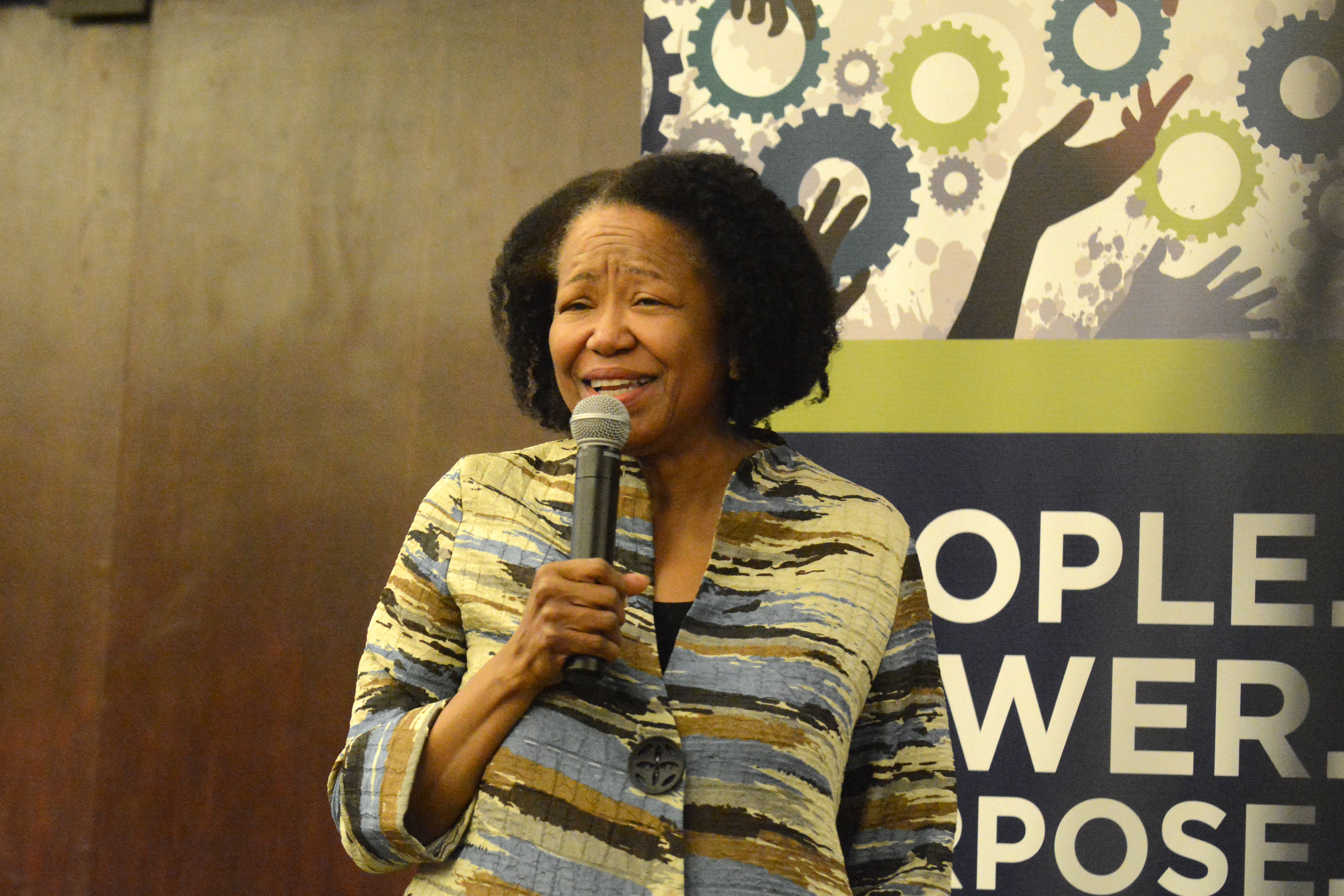
Dr. Gail C. Christopher
Virtual town hall raised awareness about systemic issues, shared community efforts, and promoted health equity and community safety initiatives
WASHINGTON, DC, UNITED STATES, January 15, 2026 /EINPresswire.com/ -- The National Collaborative for Health Equity (NCHE) convened a powerful and inspiring town hall meeting, uniting civic leaders, community activists, scholars, and policymakers to address critical issues of crime, safety, and equity in communities across the nation. The event, guided by the Truth, Racial Healing, and Transformation (TRHT) Framework, provided a platform for authentic narratives, healing, and systemic transformation.
Dr. Gail Christopher, Executive Director of NCHE, opened the event with a call to action, emphasizing the importance of community-driven solutions amid national uncertainty. “We, the people, must stand up,” Dr. Christopher declared. “This gathering is a testament to the power of collective action and the resilience of our communities.”
The virtual town hall, which was held on December 11, featured three dynamic panels, each addressing a key pillar of the Truth, Racial Healing, and Transformation framework. It underscored the power of collaboration, innovation, and community-driven solutions in creating safer, more equitable communities. As the nation moves into 2026, NCHE remains committed to advancing truth, racial healing, and transformation.
Entitled “Ensuring Safety and Security in Communities Today," the town hall took place as hate crimes escalated in recent years, especially among people of color. More than half of all 5,800 race, ethnicity, or ancestry hate crimes reported in 2024 were against Black people; 13% of the crimes were against Hispanic or Latino people. Furthermore, anti-Black hate crimes increased 81% since 2015, according to the 2024 FBI Hate Crime Statistics Act Report. The FBI data also showed that hate crimes against Jewish people reached an all-time high - nearly 70% of religiously motivated hate crimes, even though Jews are only two percent of the population.
“Hate crimes, hate violence have been on the rise. This is a crime that has actually been increasing, which you don't hear the administration talking about,” said Civil Rights Attorney Nadia Aziz. ”But I want to connect the two. When there is an increase in divisive, inflammatory, and racist rhetoric. When tensions are high in public dialogue, you also see an increase in reported hate crimes. And so, these narratives that are coming out of the White House, that are coming out of some media outlets and commentators, they're not just false, they're incredibly harmful.”
Truth and Authentic Narratives
Moderated by Dr. Marcus Hunter, Chair of the Department of Sociology and Criminology at Howard University, this panel explored the power of truth-telling in reshaping narratives around crime and safety. Panelists, included Dr. RaShall Brackney, Distinguished Visiting Professor of Practice at George Mason University and former Chief of Police for the City of Charlottesville; Illinois State Representative Lilian Jiménez; Maryland Delegate Melissa Wells, and Civil Rights Attorney Aziz. The panel emphasized the importance of data-driven storytelling to counter misinformation and foster community trust.
Key insights included:
• Crime rates are declining nationally, yet hate crimes and divisive rhetoric are on the rise, as shared by Attorney Aziz.
• Dr. Brackney emphasized the need for communities to define their own safety and harm, advocating for a shift in power to the people.
• Representative Jiménez and Delegate Wells showcased successful community-government collaborations in Chicago and Baltimore, demonstrating the impact of youth programs, violence intervention, and data-informed strategies.
“Data has been weaponized against communities, who are not marginalized, but who have been marginalized,” said Dr. Brackney. “Black and brown communities are not marginalized people. We are exceptional people. The problem is the narratives that we spin around data. And we've weaponized narratives much more effectively than we've weaponized data. So, what I would ask, and what I tell people is. How do you reduce harm in communities? Through this truth-telling component. Because whoever controls the narrative controls the resources, controls the policies, controls the deployment of it.”
Healing and Relationship Building
The second panel featured Richard and Dawn Collins, honoring the legacy of their son, 2nd Lieutenant Richard W. Collins III, who was murdered on May 20, 2017. Collins and friends were waiting for an Uber to arrive around 3 AM near Montgomery Hall on the University of Maryland, College Park campus. Sean Urbanski, 22, a University of Maryland senior, emerged from a wooded area, screamed at the group, and proceeded to stab Collins. He was convicted of first-degree murder, but the judge dismissed a hate crime charge. Also on the panel were Abdul-Hai Thomas, Child and Youth Ombudsperson at Jacksonville's Center for Children's Rights, and Ainka Jackson, Executive Director of the Selma Center for Nonviolence, Truth, and Reconciliation.
The session examined the generational impact of hate violence and the transformative power of storytelling and restorative practices, fostering healing and resilience. Jackson outlined Selma's innovative approaches to community healing, including racial equity training and Beloved Community Block Clubs.
“Whether it's death threats, whether it's a continued attack on Selma because we've changed the world, not just in 1965, but 1865 as well, with the last major battle of the Civil War. It is so easy to let the injustice dictate your actions, versus acknowledging, I have every right to be angry,” Jackson said. “I have a right to be scared, but I'm not going to let fear dictate my actions. I'm going to let love dictate my actions.”
The final panel showcased models of systemic change that promote equity and well-being. Speakers included Adam Bush, founder of College Unbound; Leigh Foster, representing the Denver STAR program; and Dirk Butler, Chief Program Officer at NAF.
Bush highlighted College Unbound's work in honoring learning within communities, including incarcerated individuals and caregivers, as a form of reparative justice. Foster shared the success of the STAR program in Denver, which pairs social workers with paramedics to respond to mental health crises, reducing reliance on traditional law enforcement. Butler emphasized the importance of investing in education and career pathways to address systemic inequities and reduce violence.
The town hall emphasized the importance of collaboration, innovation, and community-driven solutions in creating safer, more equitable communities, reinforcing NCHE's commitment to truth, racial healing, and systemic transformation as we approach 2026.
Dr. Christopher concluded the event with a message of hope and determination. "Darkness cannot drive out darkness; only light can do that. Hatred cannot drive out hatred; only love can do that," she reminded attendees, quoting Dr. Martin Luther King Jr. "We are the inevitable movement toward a democracy that works for all of us."
About NCHE
Founded in 2014, NCHE was established to promote health equity through action,
leadership, inclusion, and collaboration. We work to create environments that foster
the best possible health outcomes for all populations, regardless of race, ethnicity,
socioeconomic status, or nativity. NCHE also works to improve conditions for health and well-being, including housing, education, income and wealth, and the physical and social environment. Further, we must address historical and contemporary structural, institutional, and interpersonal racism, which fuels inequities in our society.
Michael K. Frisby
Frisby & Associates
+1 202-625-4328
mike@frisbyassociates.com
Visit us on social media:
LinkedIn
Facebook
Legal Disclaimer:
EIN Presswire provides this news content "as is" without warranty of any kind. We do not accept any responsibility or liability for the accuracy, content, images, videos, licenses, completeness, legality, or reliability of the information contained in this article. If you have any complaints or copyright issues related to this article, kindly contact the author above.
